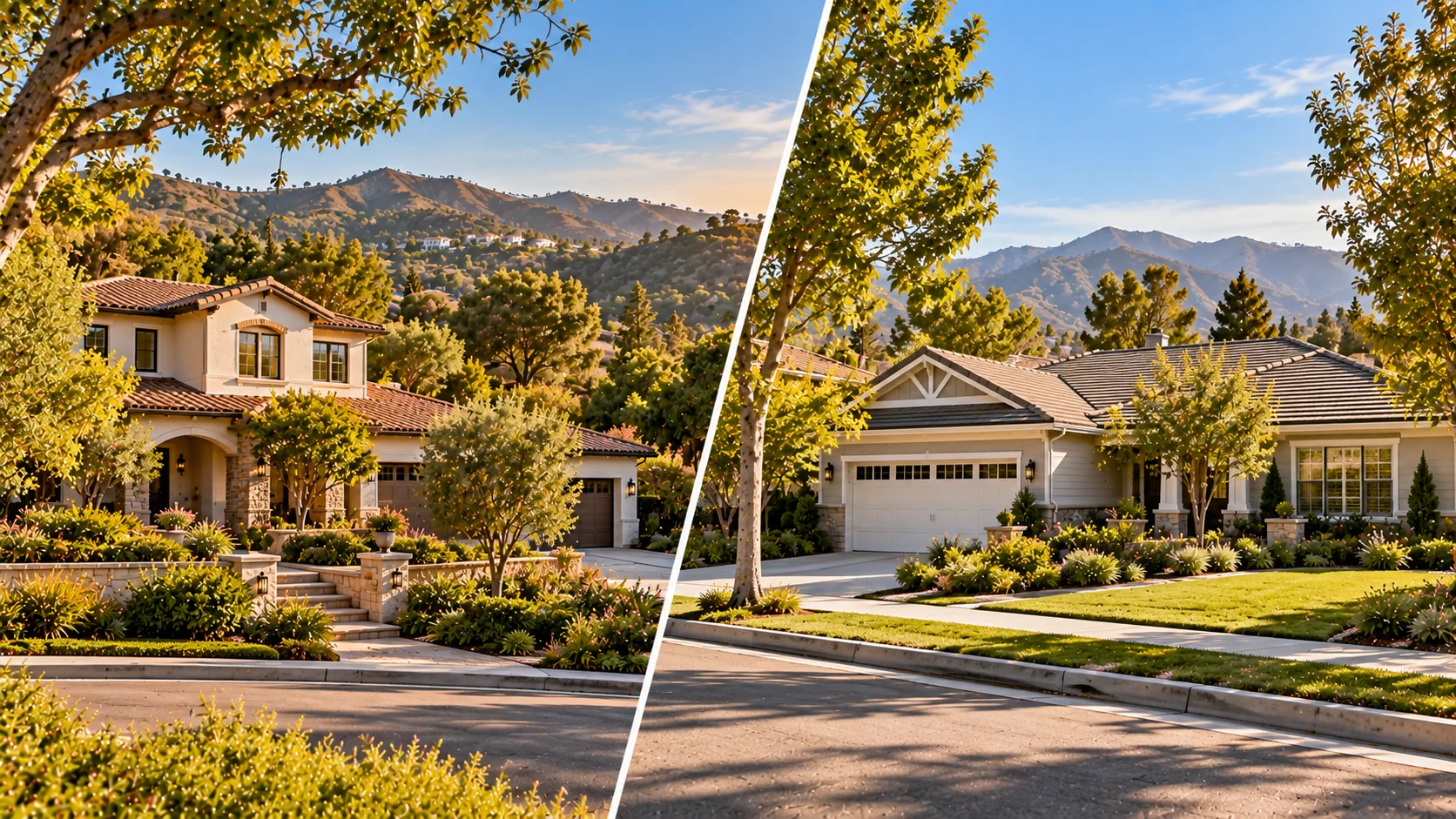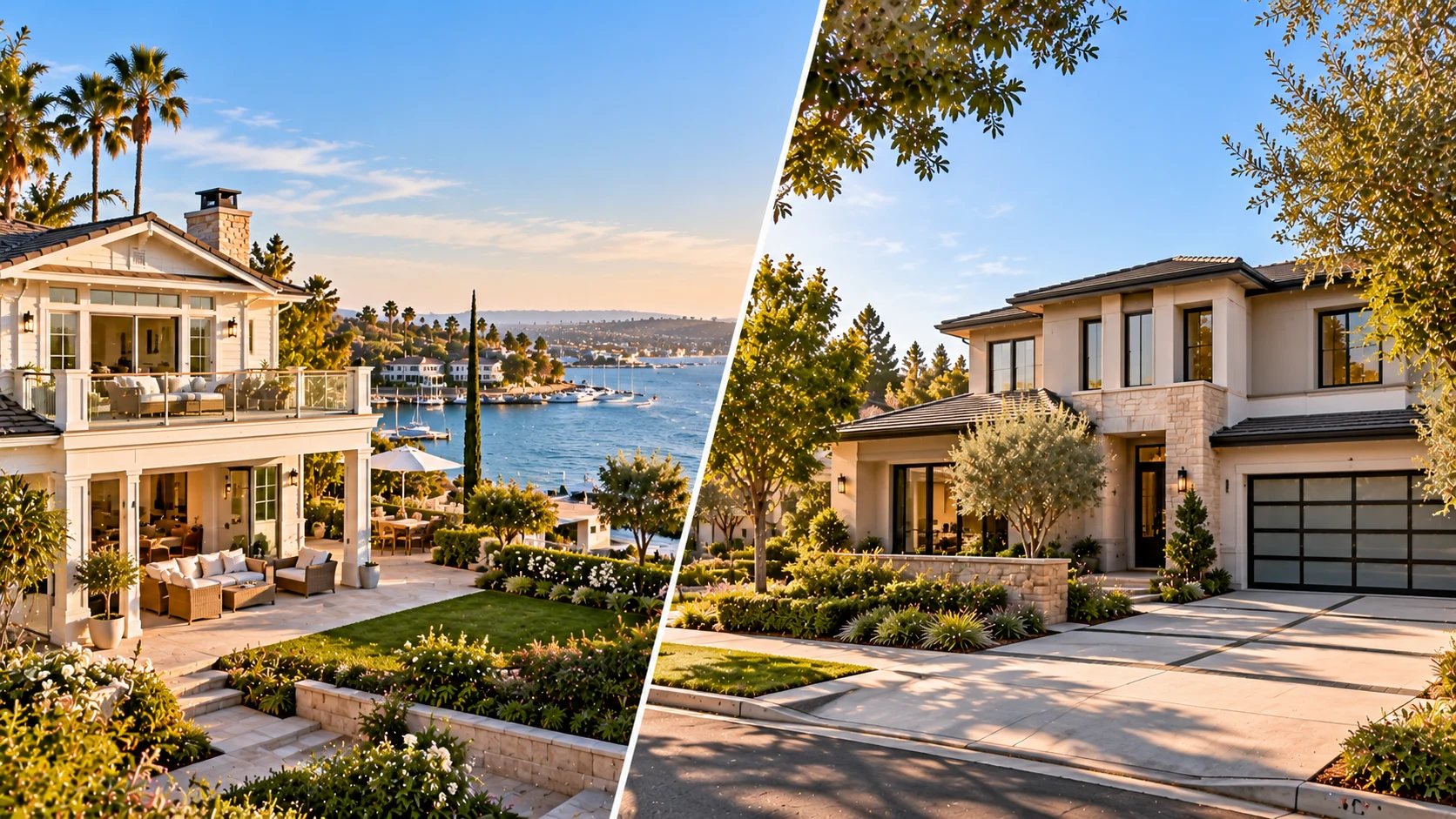
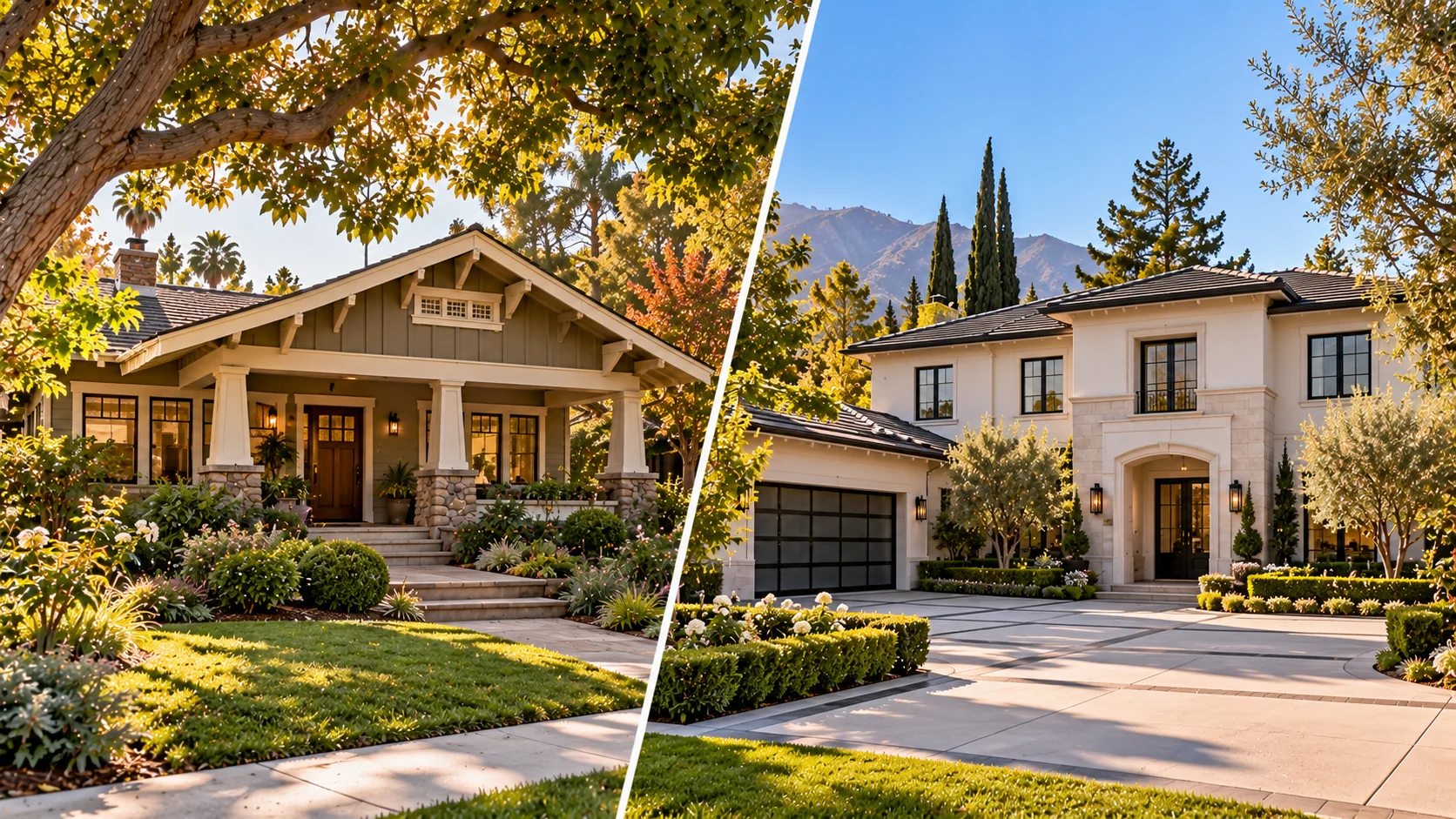
Choosing between Pasadena and Arcadia means comparing more than two desirable Southern California communities. Both cities offer established neighborhoods, distinctive residential architecture, access to outdoor recreation, and a range of homes that appeal to different buyers. However, their architectural character, neighborhood atmosphere, and housing options can feel quite different depending on where you look.
Pasadena is widely associated with historic architecture, tree-lined streets, and neighborhoods featuring Craftsman bungalows, Spanish Colonial Revival homes, and elegant traditional residences. Its housing landscape also includes renovated historic properties, contemporary designs, and substantial estates.
Arcadia offers a different mix, with traditional single-family homes, ranch-style properties, newer construction, and larger custom residences in select neighborhoods. Buyers exploring Arcadia may be particularly interested in lot size, modern layouts, and homes designed for contemporary living.
Neither city is automatically the better choice. The right fit depends on your architectural preferences, desired property features, budget, commute, and the kind of neighborhood experience you want.
This guide compares Pasadena vs. Arcadia home styles to help buyers understand the differences, evaluate their priorities, and narrow their search.
Understanding Pasadena Home Styles and Architectural Character
Pasadena has a strong architectural identity shaped by its history and the preservation of many older residential neighborhoods. Buyers who appreciate craftsmanship, character, and homes with distinctive design details often find a wide variety of options throughout the city.
Craftsman Homes and Historic Bungalows
Craftsman homes are among Pasadena’s best-known residential styles. These properties often feature broad front porches, exposed structural details, low-pitched roofs, natural materials, and carefully designed interior woodwork.
Depending on the age and condition of the property, buyers may encounter original built-ins, hardwood floors, decorative windows, and rooms that reflect an earlier approach to residential design.
For buyers who value architectural character, these details can make a home feel distinctive rather than interchangeable with newer construction.
However, historic homes deserve careful evaluation. Some have been extensively updated, while others may require work involving plumbing, electrical systems, roofing, insulation, or foundation conditions. A beautiful exterior does not necessarily reveal the condition of the home’s underlying systems.
Before purchasing a Craftsman property, consider:
- Whether original architectural features have been preserved.
- How well the home’s systems have been maintained or upgraded.
- Whether the floor plan supports your everyday needs.
- Whether any historic-preservation rules or local requirements could affect renovations.
- Whether the projected maintenance costs fit your long-term budget.
The appeal of a Craftsman home often lies in its combination of personality and craftsmanship, but buyers should understand the responsibilities that can come with an older property.
Spanish Colonial Revival and Mediterranean-Inspired Homes
Pasadena also has homes influenced by Spanish Colonial Revival and Mediterranean architecture. These properties may feature stucco exteriors, red-tile roofs, arched openings, decorative tilework, courtyards, and warm, textured finishes.
The style can create a strong connection between indoor and outdoor spaces. Depending on the design, a home might have a sheltered patio, a garden courtyard, or a living area that opens toward the backyard.
These architectural details appeal to buyers who want a home with a recognizable aesthetic and an atmosphere that feels established rather than newly built.
When evaluating a Spanish-style property, look beyond its visual appeal. Pay attention to roof condition, drainage, window performance, waterproofing, and the maintenance requirements of exterior finishes. Older homes may also have additions or renovations that warrant careful inspection.
Traditional Residences, Renovated Homes, and Contemporary Designs
Not every Pasadena home is historic. Buyers can also find traditional residences, remodeled properties, and modern homes that incorporate open living areas, updated kitchens, larger windows, and contemporary materials.
Some older houses have been renovated to create a balance between original exterior character and more functional interiors. Others have undergone substantial additions or have been replaced with newer construction.
This range can make Pasadena appealing to buyers who want architectural variety. One neighborhood may feature historic homes with mature landscaping, while another may offer more conventional layouts or modernized residences.
When comparing properties, determine whether you prefer an original home with period details, a renovated home that requires less immediate work, or a newer property with contemporary amenities. Each option comes with different trade-offs involving maintenance, design flexibility, and purchase price.
Exploring Arcadia Home Styles and Residential Options
Arcadia offers a broad range of residential properties, including established homes, ranch-style residences, newer construction, and larger custom homes in selected areas. Its housing stock can appeal to buyers seeking practical layouts, generous living spaces, and opportunities to find a property that suits modern household needs.
Ranch-Style Homes and Established Residences
Ranch-style homes are an important option to consider when exploring Arcadia. These properties are often single-story or predominantly single-story, with relatively low rooflines and layouts designed around accessible everyday living.
Depending on the individual home, buyers may find spacious living rooms, direct access to the backyard, attached garages, and floor plans that can be adapted to changing needs.
Single-story homes can be particularly appealing to buyers who prefer fewer stairs or want a layout that keeps the main living spaces on one level.
However, ranch-style architecture does not guarantee a large lot, an open floor plan, or updated systems. Homes in the same general category can differ substantially in condition, layout, usable outdoor space, and renovation history.
During your search, evaluate the actual property rather than relying on architectural labels alone. A well-maintained older home may suit your needs better than a recently renovated property with an awkward floor plan.
Newer Construction and Custom Homes
Arcadia also has newer and substantially rebuilt residences, including custom homes designed around contemporary preferences.
Depending on the property, features may include open-concept kitchens, larger primary suites, modern bathrooms, energy-efficient systems, integrated indoor-outdoor living areas, and dedicated spaces for work or recreation.
For buyers who prioritize modern conveniences, these properties may reduce the need for immediate cosmetic renovations. They can also offer layouts that reflect how many households use their homes today.
Still, newer construction should not be treated as maintenance-free. Buyers should review permits, construction quality, warranties, drainage, roof details, mechanical systems, and the condition of outdoor improvements.
If a home has been recently rebuilt or substantially expanded, confirm that the work was completed with the appropriate approvals. Where necessary, consult qualified inspectors and local professionals to evaluate the property.
Larger Lots, Outdoor Living, and Flexible Floor Plans
For some buyers, Arcadia’s appeal lies in the opportunity to find properties with substantial outdoor areas or flexible interior space. Depending on the neighborhood and individual listing, a home may offer room for a patio, garden, pool, outdoor dining area, or additional recreational space.
Larger properties can also offer options for future improvements, but the available possibilities depend on zoning, setbacks, easements, existing structures, and other local requirements.
Do not assume that a large-looking lot can accommodate every planned improvement. If you intend to add a swimming pool, expand the house, build an accessory dwelling unit, or redesign the landscaping, investigate the relevant requirements before making a purchase decision.
Buyers should also distinguish between total lot size and usable outdoor space. A property may have a generous footprint but include slopes, drainage features, or areas that limit practical use.
The best Arcadia property is not necessarily the largest one. It is the home whose layout, lot, and maintenance needs align with your priorities.
Pasadena vs. Arcadia: Comparing Lifestyle, Location, and Home-Buying Priorities
Architecture is an important part of the decision, but the surrounding community can be just as influential. Pasadena and Arcadia offer different combinations of neighborhood character, local amenities, transportation options, and residential environments.
Neighborhood Atmosphere and Everyday Convenience
Pasadena includes a mix of historic residential streets, established neighborhoods, commercial districts, and areas with convenient access to dining, shopping, cultural attractions, and public spaces.
Depending on the neighborhood, residents may enjoy a more traditional streetscape with older homes, mature trees, and sidewalks. Other parts of the city offer different architectural and residential patterns.
Arcadia also has established residential neighborhoods, shopping areas, restaurants, parks, and community amenities. Buyers may find the combination of single-family housing and suburban residential streets attractive, although the experience varies by location.
Rather than comparing the cities as a whole, identify the specific neighborhoods that fit your needs. A property’s distance from major roads, shopping destinations, schools, parks, and public transportation can have a greater impact on daily life than the city name alone.
Floor Plans, Lot Size, and Renovation Potential
The two cities offer different opportunities depending on the specific property.
Pasadena may appeal to buyers who appreciate historic design and are comfortable evaluating older construction. Arcadia may appeal to buyers prioritizing contemporary layouts, ranch-style homes, or newer custom residences.
These are broad tendencies, not universal rules. Both cities contain varied housing stock, and individual properties can depart significantly from neighborhood patterns.
When comparing homes, focus on these practical considerations:
- Interior layout: Does the home provide enough bedrooms, bathrooms, storage, and flexible living space?
- Outdoor space: Is the yard suitable for your intended use, and how much maintenance will it require?
- Property condition: Are major systems in good condition, or should you budget for near-term repairs?
- Renovation flexibility: Can you make the improvements you want within applicable regulations?
- Long-term suitability: Will the home continue to work if your household, work arrangements, or lifestyle changes?
A home with the right layout may be a better fit than one with a more impressive architectural style but less usable space.
Budget, Commute, and Long-Term Ownership
Your budget should account for more than the purchase price. Property taxes, insurance, maintenance, utilities, potential renovations, and ongoing landscaping costs all affect the total cost of ownership.
Older homes may require additional attention to aging systems or preservation-related details. Newer homes may have higher upfront prices in some circumstances, while still requiring routine maintenance and careful inspection. Neither pattern applies to every property.
Commute considerations also deserve attention. Compare actual travel routes and times for the hours you expect to travel. Proximity to a freeway or major road may be convenient, but it can also affect noise levels and the feel of a residential street.
For long-term planning, consider how easily the property could adapt to changing needs. A home office, ground-floor bedroom, guest accommodations, or usable outdoor space may become increasingly important over time.
If resale is part of your decision, evaluate the property’s location, condition, layout, and likely appeal to future buyers. Avoid assuming that one architectural style or city will always outperform the other. Local market conditions and the individual property matter.
Which City Is Better for Your Home Search?
Pasadena may be worth prioritizing if you are drawn to historic architecture, Craftsman craftsmanship, Spanish-style homes, or neighborhoods with distinctive architectural character.
Arcadia may deserve closer attention if you are seeking ranch-style homes, newer custom construction, or properties with layouts and outdoor spaces that support contemporary living.
Buyers who remain undecided should compare several homes in each city rather than narrowing the search based on reputation alone. Seeing properties in person can reveal differences in natural light, room proportions, privacy, street activity, and maintenance requirements that are difficult to assess from listing photos.
The right decision is the one that balances your architectural preferences with the practical realities of owning the home.
Frequently Asked Questions About Pasadena vs. Arcadia Home Styles
1. What is the main difference between Pasadena and Arcadia home styles?
Pasadena is especially known for its historic architectural character, including Craftsman, Spanish Colonial Revival, and traditional homes. Arcadia offers established residences, ranch-style houses, newer construction, and custom homes. Both cities have varied housing stock, so the differences depend on the specific neighborhoods and properties being compared.
2. Is Pasadena or Arcadia better for buying a historic home?
Pasadena is often a natural starting point for buyers specifically seeking historic architecture and period details. However, the suitability of a historic property depends on its condition, maintenance history, renovation requirements, and any applicable preservation rules. Buyers should inspect the property and confirm local requirements before committing.
3. Does Arcadia have modern and newly built homes?
Yes. Arcadia has newer and substantially rebuilt homes, including contemporary and custom-designed residences. Availability, architectural style, lot size, and pricing vary by neighborhood and listing. Buyers should verify construction history, permits, and property condition rather than assuming that every recently updated home is new construction.
4. Which city is better for homes with larger lots and outdoor living space?
Both Pasadena and Arcadia have properties with outdoor areas, but lot size and usability vary considerably. Arcadia buyers may find properties with generous yards in selected neighborhoods, while Pasadena also has homes with substantial gardens and outdoor entertaining areas. Compare actual lot dimensions, usable space, zoning, and the improvements permitted on each property.
5. How should I choose between Pasadena and Arcadia when buying a home?
Start by identifying your preferred architectural style, budget, desired floor plan, outdoor-space requirements, commute, and tolerance for renovation work. Tour homes in both cities and compare their condition, neighborhood setting, and total ownership costs. A local real estate professional can help you evaluate current listings and focus on properties that fit your priorities.
Find the Right Home in Pasadena or Arcadia
Choosing between Pasadena and Arcadia comes down to finding the right combination of architectural character, usable space, neighborhood setting, and long-term value for your needs. Whether you are drawn to a historic Pasadena Craftsman, a Spanish-style residence, an established Arcadia ranch home, or a contemporary custom property, a focused search can help you make a more confident decision.
Ready to compare homes in Pasadena and Arcadia? Contact Jeff for guidance on identifying properties that match your preferences, evaluating neighborhood options, and navigating your Southern California home search.